
Aesthetics
PRP Hair Treatment
Support healthier-looking hair with PRP Hair Treatment in Karachi at Dental Oasis. Platelet-rich plasma prepared from your own blood is used as part of a personalized treatment plan for selected types of hair thinning and hair loss.
Overview
What Is PRP Hair Treatment?
PRP Hair Treatment in Karachi is a minimally invasive procedure that uses platelet-rich plasma prepared from your own blood as part of a treatment plan for certain types of hair thinning and hair loss.
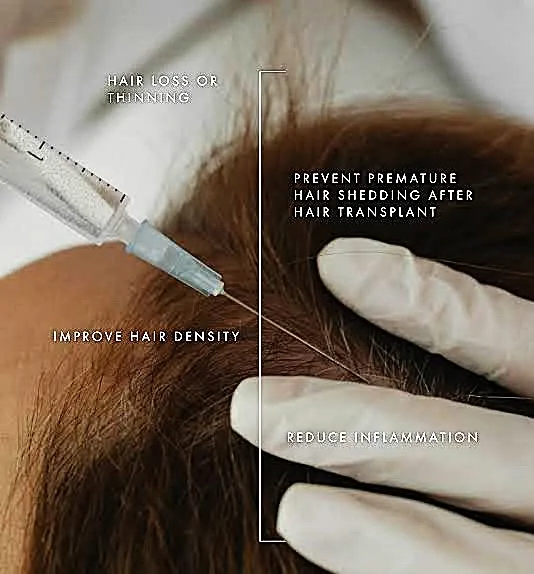
PRP stands for Platelet-Rich Plasma. During the procedure, a small blood sample is collected and processed to separate the plasma and platelets from other blood components. The platelet-rich preparation is then injected into selected areas of the scalp.
Platelets contain growth factors and other biological substances involved in tissue repair and healing. PRP has therefore been studied as a potential treatment option for certain types of hair loss, particularly androgenetic alopecia, commonly known as pattern hair loss.
PRP is not suitable for every type of hair loss, and results can vary significantly between individuals. Identifying the underlying cause of hair loss is an important part of treatment planning.
At Dental Oasis, we assess your scalp, pattern of hair loss, medical history, and treatment goals before recommending PRP.
Who May Benefit From Hair PRP?
PRP may be considered for selected patients experiencing:
Pattern hair loss
Thinning hair
Reduced hair density
Early-stage hair loss
Hair miniaturization
Certain forms of non-scarring hair loss
PRP tends to be more appropriate when viable hair follicles are still present in the affected area.
It may be less suitable when follicles have been permanently destroyed or when hair loss is caused by an underlying condition requiring a different form of treatment.
A proper assessment is therefore important before starting treatment.
Common Causes of Hair Loss
Hair loss can occur for many different reasons.
Common causes include:
Genetic or pattern hair loss
Hormonal changes
Nutritional deficiencies
Significant stress
Certain illnesses
Medications
Thyroid disorders
Scalp conditions
Autoimmune conditions
Post-illness shedding
Not every type of hair loss responds to PRP in the same way.
For this reason, treatment should begin with an assessment rather than simply assuming that PRP is the appropriate solution.
Hair PRP at Dental Oasis
At Dental Oasis, we take an individualized approach to hair PRP.
Before treatment, we discuss:
Your pattern of hair loss
Duration of hair thinning
Previous treatments
Medical history
Current medications
Scalp condition
Treatment expectations
Where appropriate, additional medical evaluation or laboratory testing may be recommended to investigate possible underlying causes of hair loss.
Our goal is to identify suitable candidates for PRP and establish realistic expectations before treatment begins.
How Does Hair PRP Work?
Hair PRP uses platelet-rich plasma prepared from your own blood.
The basic process is:
Blood collection → PRP preparation → Scalp injection
A small amount of blood is collected and processed to obtain the platelet-rich plasma.
The prepared PRP is then injected into selected areas of the scalp where hair thinning is present.
The biological factors contained within platelets may support the local tissue environment around hair follicles.
However, PRP should not be presented as a guaranteed cure for hair loss. Response varies between patients, and some individuals may require additional or alternative treatments.
Is Hair PRP Painful?
Hair PRP involves multiple small injections into the scalp, so some patients may experience mild discomfort, pinching, or stinging.
The level of discomfort varies depending on individual sensitivity and the treatment area.
A topical or local anesthetic approach may be considered when appropriate to improve comfort.
How Many Hair PRP Sessions Are Needed?
Hair PRP commonly involves a series of treatment sessions rather than a single procedure.
The number and frequency of sessions depend on:
Type of hair loss
Severity of thinning
Age
Scalp condition
Individual response
Treatment goals
Your provider can recommend a personalized treatment schedule after assessing your hair loss.
Maintenance sessions may also be considered depending on your response and ongoing hair-loss pattern.
When Will I See Results?
PRP does not produce instant hair growth.
Hair follicles require time to respond, and visible changes may develop gradually over several months.
Some patients may notice changes in hair shedding or thickness before more noticeable improvements in density.
Results vary, and factors such as the underlying cause of hair loss, stage of treatment, genetics, nutrition, and overall health can influence the outcome.
Who May Not Be Suitable for Hair PRP?
PRP may not be appropriate for everyone.
Treatment may need to be postponed or avoided depending on factors such as:
Certain blood disorders
Significant platelet abnormalities
Active scalp infection
Certain inflammatory scalp conditions
Certain medications
Conditions affecting blood clotting
Advanced scarring hair loss
Medical conditions requiring another form of treatment
A proper assessment is important before beginning treatment.
If hair loss appears sudden, severe, patchy, or associated with scalp inflammation or other symptoms, further medical investigation may be required before PRP is considered.
Hair PRP vs. Hair Mesotherapy
Although both treatments involve scalp injections, they are different procedures.
Hair PRP uses platelet-rich plasma prepared from the patient's own blood.
Hair mesotherapy involves injecting a selected formulation into the scalp, with ingredients varying according to the specific protocol.
The most appropriate treatment depends on the cause and pattern of hair loss, medical history, and treatment goals.
In some cases, PRP may be considered alongside other treatments rather than used alone.
Why Choose Dental Oasis?
At Dental Oasis, we focus on individualized aesthetic treatment and realistic expectations.
Our Hair PRP approach includes:
Detailed hair-loss assessment
Personalized treatment planning
Sterile blood collection and injection techniques
PRP preparation using your own blood
Scalp-focused treatment
Clear aftercare instructions
Follow-up and treatment monitoring
Our goal is not simply to perform a procedure, but to determine whether PRP is an appropriate option for your particular pattern of hair loss.
Signs & Symptoms
You may benefit from a professional hair-loss assessment if you notice:
Increased hair shedding while showering or brushing
Gradual thinning of the hair
A widening hair part
A receding hairline
Thinning around the temples
Reduced hair density on the crown or top of the scalp
A progressively thinner ponytail
More visible scalp than usual
Hair becoming noticeably finer or weaker
Increased hair loss over several months
Family history of pattern hair loss
Sudden or patchy hair loss, significant scalp itching or inflammation, or rapidly worsening hair loss may indicate an underlying condition that requires medical evaluation before considering aesthetic treatments such as PRP.
If you're noticing progressive hair thinning or reduced hair density, an early assessment can help identify the likely cause and determine whether PRP Hair Treatment may be suitable for you.
Treatment Procedure
Hair PRP Procedure
Step 1 – Consultation & Assessment
Your hair loss pattern, scalp condition, medical history, previous treatments, and expectations are evaluated.
Step 2 – Treatment Planning
The appropriate scalp areas and treatment protocol are determined.
Step 3 – Blood Collection
A small amount of your own blood is collected using sterile technique.
Step 4 – PRP Preparation
The blood sample is processed to separate platelet-rich plasma from the other blood components.
Step 5 – Scalp Preparation
The treatment area is cleaned and prepared before the injections.
Step 6 – PRP Injection
The prepared platelet-rich plasma is carefully injected into selected areas of the scalp.
Step 7 – Aftercare Guidance
You receive personalized instructions regarding scalp care, washing, exercise, medications, and other activities following treatment.
Benefits
Benefits of Hair PRP
For appropriately selected patients, Hair PRP may:
Support hair follicle activity
Help improve hair density
Support thicker-looking hair
Reduce the appearance of thinning in some patients
Provide a minimally invasive treatment option
Use the patient's own blood-derived platelet-rich plasma
Complement other evidence-based hair-loss treatments
The response to treatment varies, and PRP does not guarantee complete hair regrowth.
Treatment Duration
45–60 minutes per session, depending on the treatment protocol and number of areas being treated.
Recovery
Hair PRP generally involves minimal downtime. You may experience temporary: Scalp tenderness Redness Mild swelling Bruising Small injection-site marks These effects generally settle as the scalp recovers. You will receive specific instructions regarding: When to wash your hair Exercise Heat and sweating Hair products Scalp manipulation Sun exposure Follow the aftercare instructions provided by your treatment provider.